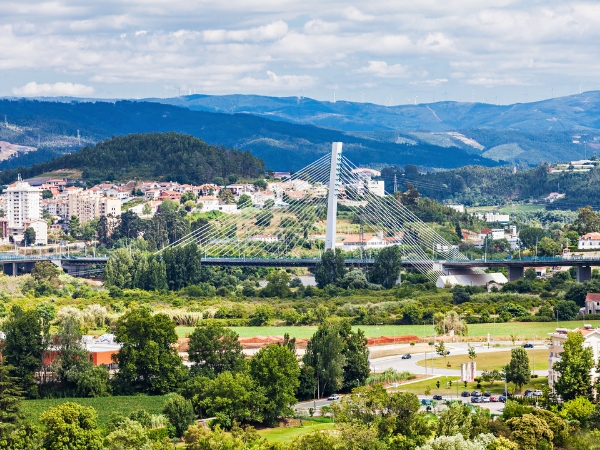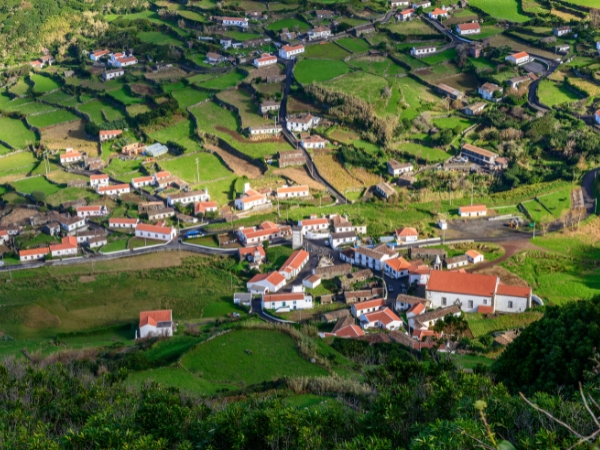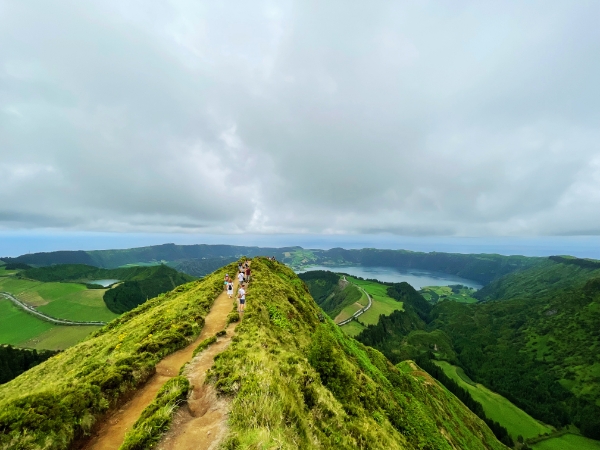
Portugal has a variety of landscapes in a surprisingly small country, and driving gives you the freedom to experience them. You can follow dramatic Atlantic cliffs, stop at quiet vineyards, explore hilltop villages, or spend time in some of the best beaches in Portugal without depending on public transport schedules.
If you rent a car in Portugal, choosing between the coast and the countryside can shape your whole journey. Our guide compares Portugal’s best coastal and inland routes, driving conditions, and more.
Portugal’s coastal routes combine lively cities, dramatic Atlantic scenery, fishing towns, and famous beaches in Portugal. Some roads are along motorways, while others slow down near resort towns and historic centres. Ocean views and beach towns often make the slower sections worthwhile, especially when you leave time for scenic detours along the Portugal coast.
The Lisbon to Cascais drive is one of the easiest coastal routes because you can enjoy river and Atlantic views for much of the journey. From Cascais, you can continue through Guincho and Cabo da Roca before following the EN247 towards Colares and climbing into Sintra’s protected cultural landscape.
Further north, the drive from Nazaré to Peniche suits travellers who want a stronger Atlantic atmosphere. Nazaré keeps its fishing heritage and giant-wave reputation, while Peniche combines maritime history with rugged coastal scenery. Porto to Aveiro creates a softer contrast, moving from urban waterfronts to ria channels, traditional boats, Barra Beach, and Costa Nova’s striped houses.
In the south, the Lagos to Tavira route highlights how different the Algarve can feel from west to east. The western Algarve features steep cliffs and exposed headlands, while the eastern side opens into calmer lagoon landscapes around the Ria Formosa.
Driving conditions along the Portuguese coast can change quickly throughout the same day. Around Ericeira and Nazaré, travellers often use fast roads between towns before switching onto smaller Atlantic-facing routes closer to the sea. Around Lagos and Sagres, local access roads usually lead to the best viewpoints instead of the fastest motorways.
Urban areas and resort towns usually create the slowest parts of a coastal itinerary. Around Porto and Albufeira, it make take time searching for parking than covering the actual distance. Paid parking zones and narrow streets matter more than motorway kilometres in many busy beach towns.
Portugal’s motorway network includes both standard toll booths and electronic toll systems. If you plan to rent a car in Portugal, check how toll payments work before leaving the car rental company.

Costa Vicentina is one of the most hidden coastal routes in Portugal because the South West Alentejo and Vicentine Coast Natural Park protects more than 100 kilometres of shoreline. Travellers find quieter beaches, steep cliffs, and fewer built-up resort areas compared with the central Algarve. Protected beaches and wild scenery give this part of the Portugal coast a very different atmosphere from the country’s busier seaside destinations.
Comporta offers another side of coastal Portugal. Roads pass through rice fields and areas known for nesting storks before reaching wide sandy beaches with generous parking. Near Sintra, Azenhas do Mar stands out for its dramatic clifftop setting above the Atlantic and its striking whitewashed buildings.
In the eastern Algarve, Ilha de Tavira works as a drive-and-ferry stop because you can leave your cars on the mainland before crossing towards the island beaches. Farther north-west, Foz do Minho near Caminha combines river-mouth scenery, pine forests, and a quieter natural setting that many travellers miss during a typical road trip in Portugal.
Inland Portugal replaces Atlantic views with vineyard terraces, mountain landscapes, medieval villages, and open plains. Travellers often spend less time in heavy traffic and more time enjoying scenic local roads.

The Douro Valley route between Peso da Régua and Pinhão remains one of Portugal’s classic inland drives because travellers move directly through terraced vineyards, wine estates, and riverside scenery. The landscape itself reflects centuries of wine production and remains one of the country’s most recognisable rural regions.
An Alentejo route through Évora and Monsaraz combines a UNESCO-listed historic city with one of Portugal’s best-preserved hilltop villages. Serra da Estrela gives you a completely different setting, with mountain scenery shaped by geology, glacial history, and changing elevations. Drivers planning a road trip in Portugal often choose this region for cooler temperatures and dramatic inland views.
In Central Portugal, Piódão and Sortelha offer two very different village experiences. Piódão sits deep within the Serra do Açor, among schist hillsides, while Sortelha rises above rocky terrain, offering broad countryside views from its castle area. In northern Portugal, the Braga to Gerês route allows you to combine historic city streets with Peneda-Gerês National Park, the country’s only national park.
Many travellers feel more relaxed inland because rural roads usually involve less traffic pressure than busy coastal resort areas. Alentejo is one of the clearest examples, with long open plains and a naturally slower pace. The Historic Villages routes also pass through low-traffic countryside that feels quieter and less crowded than major tourist corridors.
Mountain areas require careful driving. Roads around Piódão can be narrow, steep, and uneven near the edges, while the Serra da Estrela demands more attention due to elevation changes and winding sections. Even so, parking usually becomes easier outside the busiest heritage centres.
Piódão includes designated visitor parking areas, while Évora is often easiest to explore by parking outside the old centre and walking through the narrow historic streets.
Your choice depends more on travel style than distance. The best road trip in Portugal comes down to whether you prefer lively coastal towns or peaceful countryside scenery.
Travellers along the Portugal coast enjoy Atlantic cliffs, surf towns, fishing ports, and some of the best beaches in Portugal, while inland regions offer vineyards, forests, mountain scenery, and wide Alentejo plains. Coastal routes usually connect towns more quickly through motorways, while inland roads move more slowly through villages and heritage areas.
Coastal destinations like Cascais and Porto suit travellers looking for lively surroundings, while inland places such as Monsaraz and Piódão are better for quiet evenings and a slower pace during a road trip in Portugal.
Coastal routes usually cost more in summer because demand stays high around Lisbon, Porto, and the Algarve, while inland cities can offer better value with easier parking and fewer toll roads.
Many travellers also find late spring and early autumn more comfortable for a road trip in Portugal because the roads are quieter and the weather stays pleasant. If you want sea views, surf towns, and easy access to beaches in Portugal, the coast is the better fit, while inland routes suit travellers looking for vineyards and quiet villages. Families often prefer larger coastal towns, while couples usually enjoy peaceful inland stays.
With Final Rentals, you can book spacious family vehicles and premium SUVs with insurance included, making it easier to enjoy your road trip across the Portuguese coast and countryside with the right car for your route.
The most memorable road trip in Portugal usually comes from the freedom to slow down, change plans, and stop when something catches your attention. Whether you follow the Portuguese coast or head deep into the countryside, leave room in your itinerary for unexpected places, quieter roads, and longer breaks along the way.
Rent a car in Portugal with Final Rentals to enjoy unlimited mileage, included insurance coverage, and a wide range of vehicles so you can explore the Portugal coast and countryside more easily and comfortably. Book and manage your car rental at any time. Download the Final Rentals app on Google Play and the App Store.
A coastal trip is better if you want beaches, surf towns, seafood, and lively evenings. A countryside trip is better if you want vineyards, medieval villages, mountain scenery, and quieter roads.
Late spring and early autumn are usually the easiest times because they sit outside the busiest summer beach season while still giving good access to coastal and inland routes.
Yes, if you want maximum flexibility. A car helps you reach ferry access points, hilltop villages, wine valleys, and nature parks that are harder to reach with public transport.